
 By
By 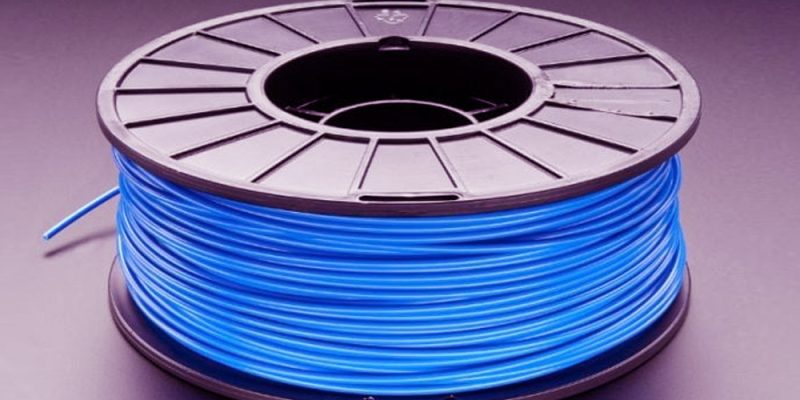
PETG 3D printer filament has turned out to be a common option among individuals who desire long lasting parts. It is fabricated using a modified PET plastic, which is the same fundamental material that is used in most food containers. The glycol added increases flexibility and brittle and this increases its ability to print compared to some harder plastics.
PETG 3D printer filament is compared by many users with PLA and ABS. It is easy to print PLA but with pressure or heat it may crack or become soft. ABS is sturdier and tends to bend and emit fumes. The PEPTG 3D printing filament presents an intermediate. It is also strong and gives no frustration when printing as ABS could sometimes experience.
Durability is another factor that makes it always trendy. Printed components are more resistant to moisture and mild chemicals as compared to PLA. This implies that the objects that are utilized in kitchen, garages or the outside environment would last longer. This material can usually be more sensible to general users than display pieces, as they wish to get practical prints but not display pieces.
Power, Elasticity and Life Time Workability.
Balance between stiffness and flexibility is one of the major characteristics of PETG 3D printer filament. It does not snap easily. Rather it can deform a little and then fracture, providing some degree of protection to working components.
This characteristic renders it appropriate in brackets, clips, mount and protective covers. Objects that are printed using the PETG 3D printing filament are capable of being used repeatedly without breaking immediately. Such reliability is important whenever one is printing parts that bear weight or have light movement.
Another beneficial factor is heat tolerance. Although it is not made to work in very industrial temperatures, PETG works better in warm temperatures compared to PLA. A printed object that is left on a hot day in a car has lower chances of deformity. The additional temperature resistance provides the user with increased confidence when printing useful tools or accessories.
The finish also stands out. A lot of the prints have slight gloss, and sections appear smooth and clean. This can be an added advantage to projects that require strength as well as a clean outlook.
Printing Preferences and Expectations.
PETG 3D printer filament is simple to print when the settings are altered. The temperatures in the nozzles are typically 220degC to 250degC. The first layers are stuck well by placing the bed at a relatively high temperature, between 70degC and 90degC.
Stringing is one of such problems. Due to the fact that the filament of a 3D printer under consideration, i.e. PETG, melts to a slightly sticky consistency, it may result in the appearance of fine strands between parts of a print. This problem can be mitigated by changing retraction settings and decreasing the speed at which the travel takes place. The use of the cooling fans should be applied cautiously because excess airflow may cause the bond between layers to become loose.
The bed adhesion tends to be high. There are other instances when prints may adhere strongly to glass or smooth surfaces. A glue stick can be used in a thin smear that can be easily removed and prevents scratches on the build plate. When dialled in the material prints continuously and gives good layer bonding.
It is also important to control moisture. Similar to most filaments, PETG takes in water in the atmosphere. Print quality can be preserved by storing the spools in containers with desiccants.
Home and Business applications.
Due to its strength, PETG 3D printer filament applies to both hobby and small business. At the house, it fits storage organisers, new knobs, plant holders, and outdoor accessories. It is moisture resistant thus suitable in the areas with humidity.
Prototypes and functional elements of a product are frequently selected in small workshops. Common examples are machine guards, cable clips, mounting brackets and light mechanical parts. PETG 3D printer filament has a strength that has allowed it to support the parts that require lasting performance without becoming frail with time.
Light cases or covers of the light version are also popular. Although complete transparency is sometimes difficult to get, the semi clear finish still suits the practical designs.
The selection of Quality PETG 3D Printer Filament in Australia.
Filament is not produced all to the same grade. Uniform diameter, neat winding, and moisture control are all the factors that influence the print results. The material can be of poor quality resulting in uneven extrusion or weak prints, which is soon frustrating.
Filament Hub has a variety of PETG 3D printer filament that can be relied upon by hobbyists, schools and professional users in Australia. They are available in various colours and spool sizes and allow the customer to choose the material to suit their project requirements. Using reliable PETG 3D printer material available with a local supplier that is trusted can also provide a significant change in the quality of the prints as well as the longevity of the performance.









Comments